
The success of Al Qaeda chierf Osama bin Laden in evading detection and arrest by the Pakistani security agencies for nearly six years since 2005 when he lived in a house near the Pakistan Military Academy in Abbottabad was the result of a comprehensive intelligence failure by all agencies responsible for the collection of intelligence inside Pakistan and not the result of a failure by the Inter-Services Intelligence ISI alone.
Insiders say that General Kayani's decision to extend Pasha's service has been made to ensure the continuity of the army's offensive against extremists in the troubled tribal regions of the country.
Pakistan is abuzz with rumours that the country's all-powerful military may topple the fragile government in Islamabad within next 48 hours.
Zahir-ul-Islam's appointment as the chief of the intelligence agency was the outcome of a consensus between the political and military leadership of Pakistan, says B Raman
United States special envoy Marc Grossman on Thursday met Pakistan's top civil and military leadership as part of efforts to salvage bilateral relations following the covert American operation in Abbottabad that killed Osama bin Laden.
About the perception that the ISI was a rogue agency that was out of the civilian government's control and indulged in its own agenda, Pasha said, "I report regularly to the president and take orders from him." Many may think in a different direction, and everyone is allowed to think differently, but no one can dare disobey a command or even do something that was not ordered, he added
Moderate Hurriyat Conference Chairman Mirwaiz Umer Farooq may have had a secret meeting with the head of Pakistan intelligence agency Inter Services Intelligence Lt Gen Ahmed Shuja Pasha in Europe, although he denies that.
The Memogate scandal in Pakistan has taken a turn for the worse, with the central character in the controversy Manzoor Ijaz's refusal to appear before the judicial commission investigating the issue. Amir Mir reports from Islamabad.
Hours after controversial Pakistani-American businessman Mansoor Ijaz failed to turn up before a judicial commission probing the memo scandal, a Pakistani parliamentary committee on Monday summoned him to appear before it on January 26.
A Pakistani parliamentarian has demanded that Inter-Services Intelligence chief Lt Gen Ahmed Shuja Pasha should resign following the claims that he travelled to Arab countries to discuss a move to oust President Asif Ali Zardari.
Insisting that the Pakistani Army is supportive of a dialogue with India, former Pakistan Foreign Minister Khurshid Mahmud Kasuri said Prime Minister Manmohan Singh should visit his country to kickstart the peace process.
Jamaat-ud Dawa chief Hafiz Muhammad Saeed has moved the Lahore high court seeking direction for the Pakistan government to defend him, Inter Services Intelligence officians and others before a United States court, which has issued summons to them in connection with the 2008 Mumbai terror attacks.
US Secretary of State Hillary Clinton and Pakistani Foreign Minister Shah Mahmood Qureshi would co-chair the first US-Pak Strategic Dialogue to be held in Washington on March 24.
Pakistan's top political leadership was on Friday briefed by Army chief Gen Ashfaq Parvez Kayani on the security situation in the country after suspected Taliban militants carried out a series of brazen attacks on military and police establishments.
Pakistan's report on its probe into the dossier provided by India into the Mumbai terror attacks was on Monday examined in Islamabad, by a top level cabinet committee, headed by Pakistan Prime Minister Yousuf Raza Gilani, before being handed over to New Delhi.
A Pakistani court has admitted a petition seeking to block any attempt by the government to sack army chief General Ashfaq Parvez Kayani and Inter Services Intelligence chief Lieutenant General Ahmed Shuja Pasha over the memo scandal. The petition filed by lawyer Maulvi Iqbal Haider was accepted by the Islamabad high court on Wednesday. Haider asked the court to restrain the president and prime minister from taking any action against the army and ISI chiefs.
A confrontation between the army and the government came to a head in Pakistan on Wednesday with the powerful army chief warning the prime minister's critical remarks against him and the ISI chief over the memo scandal could have "very serious ramifications" for the country.
Embattled Pakistani government on Monday said Inter-Services Intelligence chief Lt Gen Ahmed Shuja Pasha had stepped beyond his jurisdiction when he briefed Army Chief Gen Ashfaq Pervez Kayani about his meeting with memo scandal whistle-blower Mansoor Ijaz in London.
Amid India's suspicions of the involvement of the Inter Services Intelligence in the planning of Mumbai terror strikes, the chief of the Pakistani spy agency on Friday called on Prime Minister Yousuf Raza Gilani in Islamabad.The Director General of the ISI, Lieutenant General Ahmed Shuja Pasha, met Gilani and briefed him on the prevailing security situation, an official statement said.No further details about the meeting were available.
China has not joined India's stand on terror camps inside Pakistan when it blamed it for a recent militant attack in restive Xinjiang, state media said on Friday.
The Inter-Services Intelligence should probe allegations of its involvement in the abduction and killing of journalist Syed Saleem Shahzad and stop interfering in affairs of the civilian administration, a noted columnist said on Wednesday in an open letter to the chief of the Pakistani spy agency.
The confidential document shows that the then British Foreign Secretary David Miliband had called Zardari, asking him to send the ISI chief to India, to which the President readily agreed. He, however, was overruled by the Pakistani Army led by General Ashfaq Pervez Kayani.
"It is interesting that the US claims to want a democratic Pakistan, but whenever there's a congressional delegation that goes to Pakistan, they don't meet their counterparts in the National Assembly. They all want to meet General Kayani and General Pasha, because they understand that's where the power lies," said Christina Fair of the Georgetown University.
The United States has made it clear that its first strategic dialogue with Pakistan next week is not being held at India's expense, even as it said it is 'pleased' that Pakistan army chief Ashfaq Parvez Kayani is part of Islamabad's delegation as there can be no such talks without the military participation.
"How can you have a strategic dialogue without including the military," Special US Representative for Pakistan and Afghanistan Richard Holbrooke told reporters at the Foggy Bottom headquarters of the State Department.
Diplomatic and other sources say the two organisations believe they can play a role because they are intrinsically linked to policy-making in Pakistan.
As pressure mounted on Islamabad to move against the Haqqani network, accused by United States of carrying out a spate of attacks in Kabul, Inter-Services Intelligence chief Lt Gen Ahmed Shuja Pasha rushed to Washington to hold a quite meeting with the new Central Investigation Agency head Gen David Petraeus.
Pakistan on Saturday did an about turn on sending the Inter-Services Intelligence chief to India, in connection with the probe into the terrorist attacks in Mumbai, saying a representative of the spy agency would be sent instead of him.The decision was made at a late night meeting between President Asif Ali Zardari and General Ashfaq Parvez Kayani, the chief of the powerful army. Prime Minister Yousuf Raza Gilani also joined the meeting.
Pakistan is preparing to block a lawsuit in a United States court that alleges complicity of its spy chief Lt Gen Ahmed Shuja Pasha in the audacious 2008 Mumbai terror attacks, on the grounds that it will pour "gasoline on the fire" of India-Pakistan relations.
Security analsyst abd rediff columnist B Raman on why a new ISI chief was anointed in Pakistan.

While Asim Malik's role in Pakistan's recent warming up of relations with the US is acknowledged, army watchers note a recent distancing, what with Asim Munir not wanting his DG, ISI to share the limelight during his subsequent sojourns to Tampa and Brussels, points out Rana Banerji, who headed the Pakistan desk at RA&W.
Asim Malik's shift to the important DG, ISI post comes as something of a surprise now, but it indicates the army chief's confidence in him, notes Rana Banerji, who headed the Pakistan desk at RA&W.

Former Inter-Services Intelligence chief Ahmed Shuja Pasha has admitted that the deadly Haqqani network was created by it and America's Central Intelligence Agency and claimed that the insurgent group's chief Jalaluddin Haqqani had "in fact been invited to the White House by President (Ronald) Reagan".

"We want good ties with all neighbours including India and Afghanistan," he told the Senators.

Voicing his frustration over the double game played by the Inter-Services Intelligence in the war against terror after 9/11, a former central intelligence agency chief has said that "duplicitous" is a gentler way to describe the notorious Pakistani spy agency, which has close links with terror groups.
When then ISI director Lieutenant General Ahmad Shuja Pasha visited Washington, DC for a meeting with CIA Director Michael Hayden, he admitted that the planners of the Mumbai attacks included some 'retired Pakistani officers' and that the attackers had 'ISI links, but this had not been an authorised ISI operation.'

But the ISI chief did not retire giving the impression that he has won General Asim Munir's trust, notes Rana Banerji who headed the Pakistan desk at RA&W.

In his latest book 'Playing to the Edge', Michael Hayden, the former CIA director said that Pasha had conceded that some of the powerful spy agency's retired members were engaged in training those involved in the heinous crime but refused to take action.

His disqualification to participate in future elections may follow, notes Rana Banerji, who headed the Pakistan desk at RA&W, India's external intelligence agency.
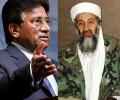
Former Pakistani military dictator Pervez Musharraf possibly knew about slain Al Qaeda leader Osama bin Laden and his place of hiding, an eminent British journalist who reported for years from Afghanistan and Pakistan for the New York Times has claimed.
